2000–2006 Chevy Tahoe Build Guide
The second-generation Chevrolet Tahoe is a popular foundation for street, off-road, audio and custom SUV projects. Use this guide to choose a direction, prioritize upgrades and research parts before spending money.
Choose your Tahoe build direction
Street / Blacked-Out
Start with wheels and tires, stance, lighting and exterior details. Keep wheel diameter, tire sidewall, brake clearance and suspension travel in mind instead of choosing wheels on appearance alone.
Off-Road / Trail
Prioritize tires, suspension condition, clearance, recovery capability and dependable maintenance. Larger tires can affect gearing, braking, steering feel and clearance, so plan the combination as a system.
Big Audio
Plan the electrical system with the audio system. High-output bass builds may require attention to charging capacity, wiring, grounds, battery condition, enclosure space and safe amplifier installation.
Clean Daily Driver
Refresh worn components first, then improve wheels, tires, lighting, interior and audio in stages. This path keeps the Tahoe useful while still giving it a noticeably more custom look.
Start a Tahoe parts plan
Choose a direction, then select your Tahoe's exact year, engine, drivetrain and trim before researching listings. Estimates and search results do not verify fitment.
Street and blacked-out
Plan wheels with a simple exterior refresh, then verify dimensions and clearance.
Plan street upgrades →Off-road
Budget tires and suspension together, allowing for maintenance and clearance checks.
Plan off-road upgrades →Big audio
Start with an audio level, then plan charging, wiring and enclosure space.
Plan audio →A smarter upgrade order
- Baseline maintenance: address leaks, warning lights, worn steering/suspension parts, brakes and tire condition.
- Define the goal and budget: street, off-road, audio, show or a combination.
- Wheels, tires and suspension: research them together so stance and clearance work as intended.
- Performance and exhaust: choose changes appropriate to the exact engine and how the Tahoe is used.
- Lighting, exterior and interior: finish the look after the mechanical foundation is sorted.
- Audio: match equipment and electrical upgrades to the desired output rather than buying components independently.
Real Tahoe build: My Hoe
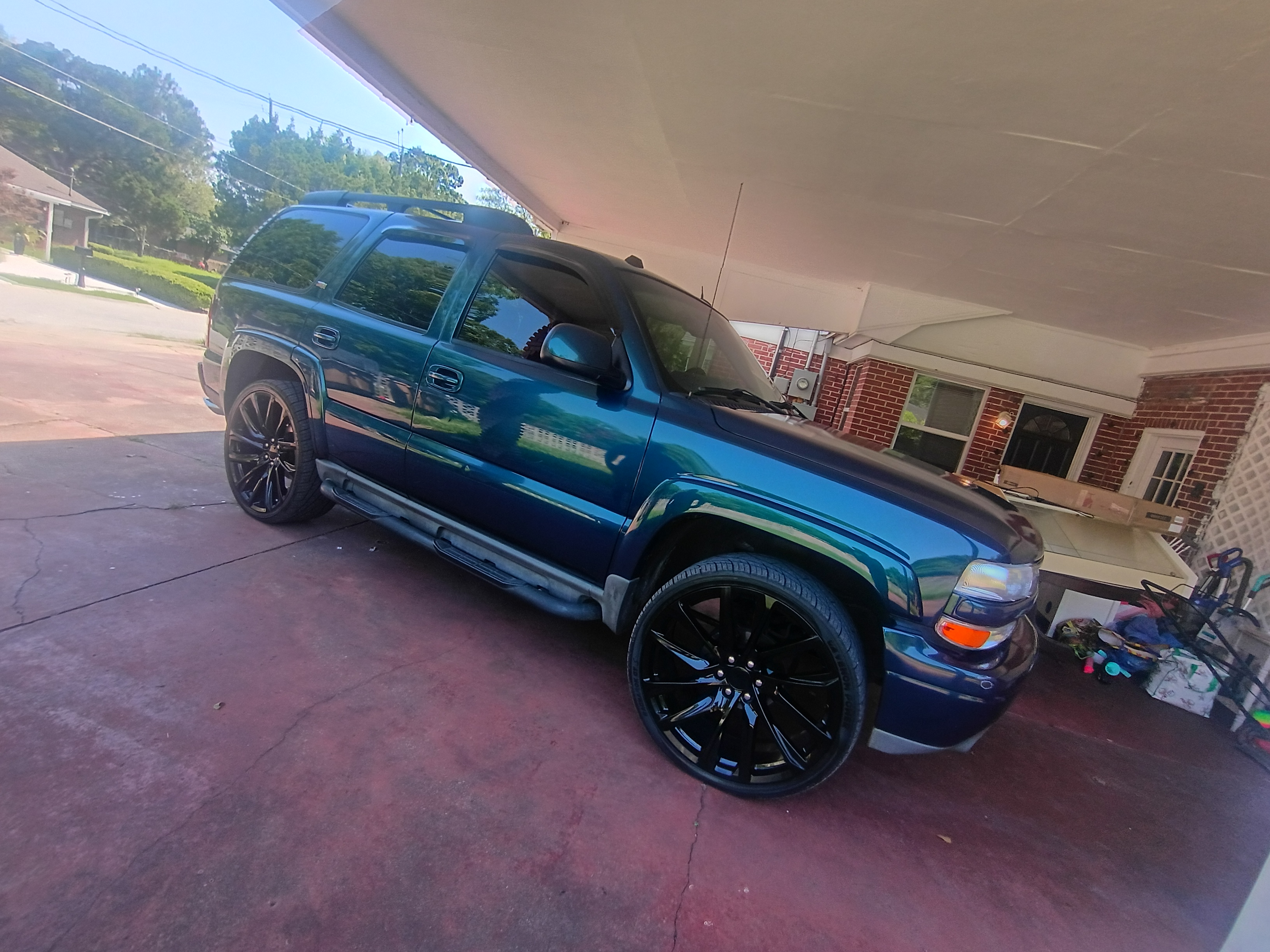
My Hoe · 2005 Chevrolet Tahoe
This approved member build features 26-inch wheels, window tint, smoked rain guards, a major bass system, new headlights and taillights, and LEDs throughout. Use it as inspiration; the planner levels below are estimates and do not identify or verify the actual parts on this Tahoe.
Before buying parts
Confirm the Tahoe's exact year, engine, drivetrain and trim where relevant. For wheels and tires, verify bolt pattern, center bore, wheel dimensions, offset/backspacing, tire dimensions, brake clearance and suspension clearance. For performance or exhaust parts, confirm engine-specific compatibility. Marketplace search results can contain incorrectly titled listings, so the listing title alone should not be treated as fitment confirmation.
Turn the idea into your Tahoe build plan
Select your exact Tahoe configuration, choose upgrade levels, estimate the project budget, get vehicle-aware recommendations and research parts from one plan.
Build My Tahoe →